Imagine a patient arriving at a clinic for a routine appointment. Everything seems normal until the patient suddenly collapses in the waiting room. A nurse rushes over, checks for responsiveness, and realizes the person isn’t breathing normally.
Someone calls emergency services while another staff member retrieves an automated external defibrillator (AED).
In that moment, knowing how to use the device becomes far more important than simply knowing where it’s stored.
AEDs are among the most valuable tools available during certain cardiac emergencies. Yet even healthcare professionals can become unfamiliar with their operation when they rarely encounter situations requiring defibrillation.
Understanding how AEDs work, when to use them, and how they fit into emergency response is essential for modern patient care.
What Exactly Does an AED Do?
An automated external defibrillator is a portable medical device designed to analyze a person’s heart rhythm and deliver an electrical shock when appropriate.
During sudden cardiac arrest, the heart may develop a dangerous rhythm that prevents it from pumping blood effectively.
Two rhythms that may respond to defibrillation are ventricular fibrillation and pulseless ventricular tachycardia.
An AED analyzes the heart’s electrical activity and determines whether a shock is advised.
Unlike what television dramas sometimes suggest, defibrillation doesn’t restart every stopped heart.
Instead, a shock can interrupt certain abnormal electrical rhythms, allowing the heart’s normal electrical activity an opportunity to resume.
Understanding this distinction helps healthcare professionals recognize why AEDs are useful in some cardiac arrests but not others.
Recognizing When an AED Is Needed
A person experiencing cardiac arrest typically becomes unresponsive and stops breathing normally.
Occasional gasping should not be mistaken for normal breathing.
Healthcare professionals should rapidly assess the patient according to their training, activate the emergency response system, and begin CPR when cardiac arrest is identified.
An AED should be retrieved and applied as soon as possible.
However, obtaining the device shouldn’t unnecessarily delay chest compressions.
High-quality CPR and early defibrillation work together as essential components of cardiac arrest management.
The AED provides rhythm analysis and shock delivery when indicated, while CPR helps maintain some blood circulation during the emergency.
Knowing the Device Is Different From Using It
Most AEDs are designed to provide clear voice or visual instructions, making them accessible even to individuals without extensive medical training.
However, familiarity with the equipment can reduce hesitation.
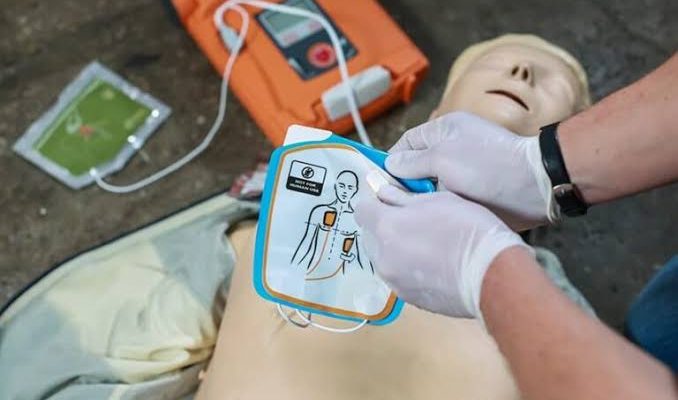
Healthcare professionals should know how to switch on the AED, expose the patient’s chest, attach the electrode pads correctly, and follow the device’s prompts.
They must also ensure nobody touches the patient during rhythm analysis or shock delivery.
Training through programs such as AED certification can introduce healthcare workers to essential defibrillation concepts and reinforce their understanding of emergency response procedures.
Hands-on practice with training devices is particularly valuable because it allows professionals to become comfortable with AED operation before facing an actual emergency.
AED Pad Placement Matters
Correct electrode placement helps the AED analyze the heart rhythm and deliver treatment effectively.
For adults, pads are generally positioned on the upper right side of the chest and the lower left side, following the illustrations provided with the device.
The chest should be exposed, and excessive moisture should be removed before attaching the pads.
Healthcare professionals may also encounter patients with implanted pacemakers or defibrillators.
In these situations, electrode pads should not be placed directly over an implanted device.
For children and infants, pediatric pads or an AED with an appropriate pediatric setting should be used when available, following current guidelines and manufacturer instructions.
Understanding these considerations helps healthcare teams avoid unnecessary delays.
Safety Should Never Be Overlooked
AEDs are designed with safety features, but proper operation remains essential.
Before delivering a shock, healthcare professionals must ensure that nobody is touching the patient.
A clear verbal warning helps communicate that everyone should move away.
Oxygen delivery equipment also requires appropriate precautions to reduce fire risks during defibrillation.
Staff should follow their facility’s emergency protocols and the AED manufacturer’s instructions.
After a shock, CPR should resume immediately according to current resuscitation guidance.
If the AED advises that no shock is needed, healthcare professionals should continue following its prompts and the established cardiac arrest algorithm.
The device’s instructions support decision-making, but they don’t replace comprehensive emergency assessment.
Every Healthcare Facility Needs an AED Plan
Owning an AED is only one part of emergency preparedness.
Imagine discovering during a cardiac arrest that the device’s battery is depleted or its electrode pads have expired.
These problems can create avoidable delays.
Healthcare facilities should establish procedures for inspecting AEDs, checking battery status, monitoring pad expiration dates, and ensuring the device remains accessible.
Staff members should also know its location and understand who is responsible for retrieving it during an emergency.
Regular drills can reveal whether the AED can be obtained quickly and whether employees are familiar with its operation.
Preparedness is most effective when equipment maintenance and staff training work together.
AED Skills Are Part of a Bigger Emergency Response
An AED cannot manage a cardiac emergency on its own.
Successful resuscitation requires a coordinated response involving early recognition, emergency activation, high-quality CPR, timely defibrillation when indicated, and appropriate advanced medical care.
Healthcare professionals may need to communicate with colleagues, manage ventilation, monitor the patient, and prepare for additional interventions.
Practicing these responsibilities helps create a more organized emergency response.
It also reinforces an important lesson: even advanced medical equipment depends on people who know how to use it effectively.
Preparation Makes the Difference
AEDs are powerful tools, but their value depends on timely access and appropriate use.
Healthcare professionals should understand how these devices work, recognize when they’re needed, and regularly refresh their practical skills.
Whether working in a hospital, dental clinic, nursing home, or outpatient facility, emergency readiness should remain a priority.
Read More: download youtube online